
CPI(ML)-New Democracy observed centenary of the First Communist Conference in India at a time when most reactionary fascist section of the ruling classes ruling at the Centre and in most of the states has declared war against communists targeting communist revolutionaries to begin with. Centenary is being observed at a time when questions are being raised about the very relevance of communist movement, obituaries are being written and suggestions for adapting revolutionary Marxism to the needs of ruling classes are being made. Centenary is being observed at a time when parliamentary cretinism has eroded and is eroding vitality of communist movement. However, the deepening crisis of the system, increasing hardships of the people, intensifying class contradictions are thrusting revolutionary change on the agenda of the people’s struggles. And communist revolutionaries remain the only force capable of bringing about revolutionary change.
To assert this necessity, CPI (ML)-New Democracy, an inheritor of the glorious legacy of communist movement, observed this Centenary through an Assembly at Kolkata on December 24, 2025.
CPI (ML) New Democracy marked 100 years of the First Communist Conference held at Kanpur in India from December 26 to 28 1925 with an assembly of over 2000 at Subodh Mallik Square in Lenin Sarini, Kolkata. Comrades from different districts of West Bengal and from states of Bihar, Telengana, Punjab, Andhra Pradesh, Uttar Pradesh, Odisha, Assam, Delhi, Jharkhand, Tamilnadu and Maharashtra came to participate in this assembly. Comrades from other CR organizations also attended the meeting. A large number of women and youth participated in this Assembly.
The Assembly resounded with revolutionary songs and speeches by leaders, from 11:30 am onwards. A poster exhibition with illustration of important movements in communist history and photos of martyrs and departed leaders also marked the occasion. The programme was the first undertaken in Kolkata since the merger of CPI (ML) New Democracy and PCC CPI (ML).
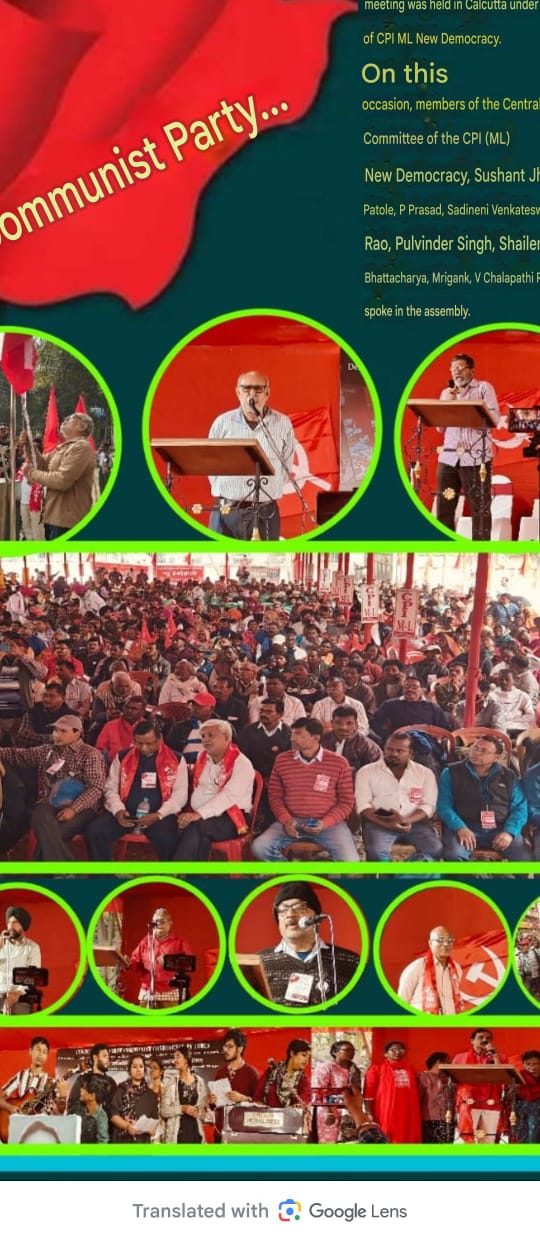
The stage and park were decked in red, with party flags flying and huge photographs of CPI (ML) Leaders- Coms Charu Mazumdar, Satya Narain Singh and CP Reddy at a platform on the stage. Three massive boards displayed photographs of martyrs of the revolutionary movement and departed leaders and a list of such names was also displayed. A long banner showed old photographs with brief descriptions of some historic peoples struggles led by the communists in India or in which communists played a significant role through the last 100 years- from the Solapur commune in 1930, revolt of INA sailors, Worli tribal revolt, Telengana Peasant Armed Struggle, Tebhaga movement, P&T workers’ strike, PEPSU Mujhara movement, Punappra-Vayalar movement, food movement in Bengal, Peasant armed struggles in Naxalbari, Srikakulam, Mushahari, Debra Gopiballabhpur, Lakhimpur Khiri, Godavari Valley resistance struggle, etc. A book counter with revolutionary and progressive literature and a medical camp run by Shramjivi Swastho Udyog were also at the Assembly site.
To the sound of reverberating slogans including those upholding Naxalbari, Telengana and Tebhaga, a senior Party leader and Secretary of its West Bengal State Committee Com. Sushanta Jha unfurled the red flag in the niche surrounded by the photos of martyrs and departed leaders. The programme took off with Com. Sumit Sinha calling on stage members of the Presidium- Coms Sushanta Jha, Central Committee member Com. Sailen Bhattacharyya, West Bengal State Committee leader Com. Chandan Parmanik and CC member Com. J.V. Chalapati Rao. Next the Party speakers were called onto the Dias- Coms VK Patole from the Central Committee of the Party, Com. P. Prasad, Party Spokesperson of AP, Party Spokesperson of Odisha Com. Bhala Chandra Shadangi, Assam State Committee leader Com. Jogesh Bhatta, Party’s Telengana spokesperson Com. S.V. Rao, Spokesperson of Punjab Committee Com. Kulwinder Singh Warraich and Spokesperson of Delhi Committee Com. Mrigank. Coms. Chandan Parmanik and Sumit Sinha conducted the Proceedings.
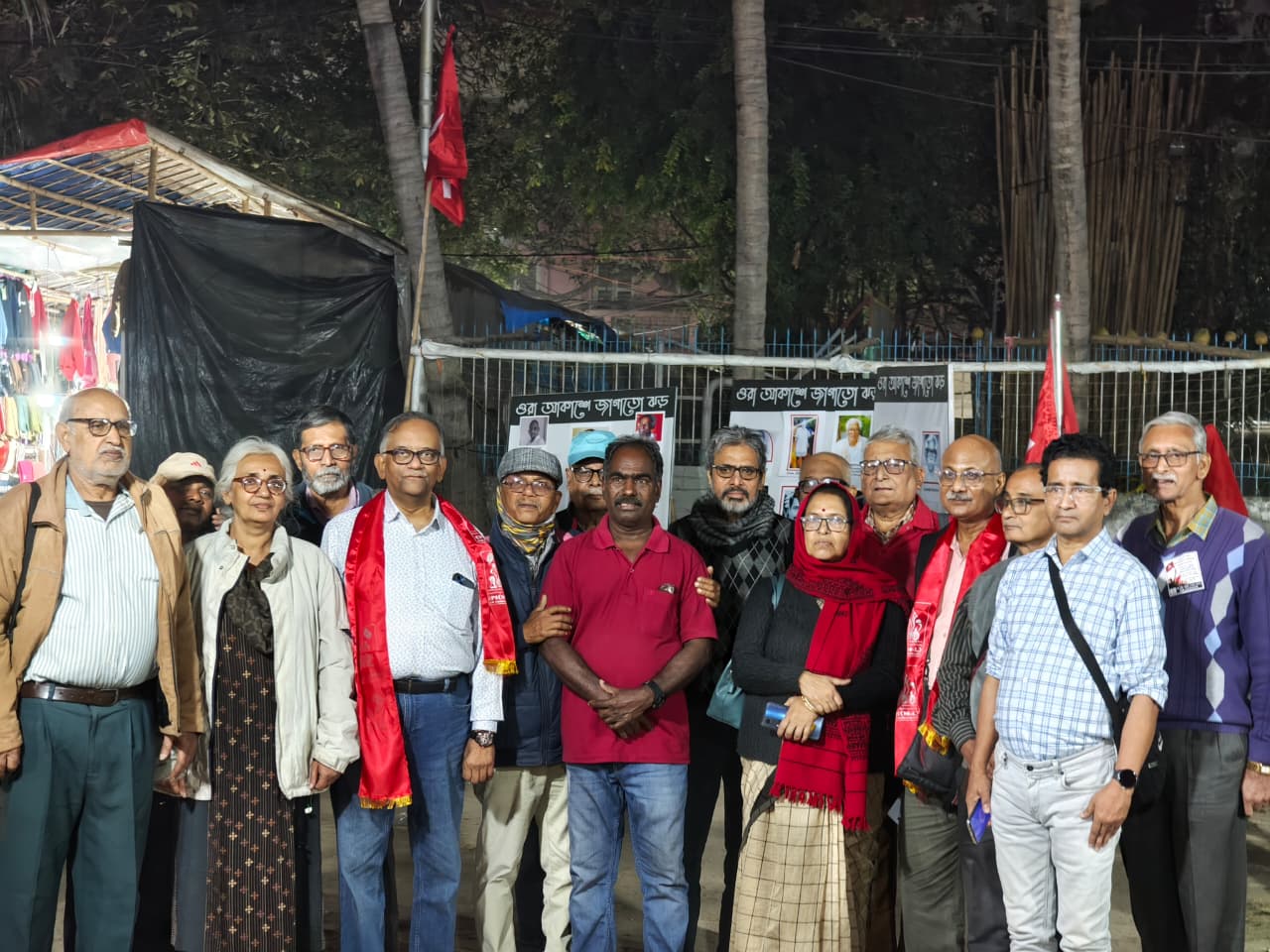
When the speakers were on the dais, a minute’s silence was observed in memory of martyrs. Then Sphulinga, the cultural team of W Bengal PDSU sang a stirring tribute to martyrs. Following this, on behalf of the Party’s Central Committee, Com. V.K. Patole came up to address the gathering.
Tracing the history of the Party, Com. Patole said in the course of communist movement it was reorganized for the second time after Naxalbari. He pointed to the situation of the people and the challenges before the revolutionary movement. He added that some people say socialism established by communists has failed. But has any other society come anywhere near providing cradle to grave security, full employment, education, health, etc. He called upon the Party members and comrades from the revolutionary organizations to take inspiration from martyrs and complete the task of NDR.
The next speaker Com. Sushanta Jha greeted the assembly and said that Communist Movement in India was born under the influence of October Revolution. He said that some organizations – CPI, CPM and even CPI (ML) Liberation who use the name of communism- have fallen to parliamentary cretinism. Modi Govt. is conducting Operation Kagar, Govt. has killed hundreds of Maoist leaders and cadres and has declared that they would finish Naxalism by March 2026. Their target is not only Maoists but the whole revolutionary camp and later even the social democrats and opposition sections of ruling classes. It is a part of the drive to impose fascist dictatorship over the country.
The organizers then helped Com. Piyasa Das Gupta, a veteran of Debra Gopiballabhpur movement and a well-known Bengali poet and Editor of Women’s magazine Samata, to take the stage. She read out a poem written by her.
Two publications by Biplabi Ganaline were released on this occasion. A special issue of the magazine on 100 years of First Communist Conference and a booklet on History of primary phase of communist movement in India.
Addressing the assembly, Com. Bhala Chandra Shadangi asserted that it is the communist revolutionaries who have stood with the adivasis and their struggles for their rights and against forcible displacements by Govts, in service of looter Corporate of the mineral wealth of India, chiefly foreign but also native. It was the struggle led by Communist Revolutionaries against forcible eviction that was important for the enactment of Forest Rights Act. CRs are supporting struggles of tribals against model of development of ruling classes based on exploitation of forest wealth by corporate. This is an important reason for attacks like Operation Kagar.
Com. Sailen Bhattacharya said that over the last hundred years communists have led struggles of workers and peasants and gave great sacrifices. However, all India movement needs be built. He stressed on the need for the unity of communist revolutionaries into a single party, communist revolutionaries being divided into several organizations and having functioned separately for decades. He gave the example of recent unity between PCC, CPI (ML) and CPI (ML) – New Democracy to speed up the process of unity of CR organizations.
Com. P. Prasad traced the relationship between the International Communist Movement and the Indian Communists. Since 1920 Comintern had been supporting communists in India and formation of CPI. ICM supported communists in India during conspiracy cases of Peshawar and Kanpur and Meerut conspiracy case. ICM also helped in correcting erroneous lines both rightist and ultra-left in the course of communist movement in the country at different occasions. Lenin took keen interest in workers’ movement in India even prior to Russian revolution, supporting workers’ strike in then Bombay against Tilak’s arrest in 1908. Lenin and ICM leadership including Stalin and Mao took keen interest and gave valuable suggestions to Indian communists. However, making revolution remains an unfinished task and we should pledge to carry revolutionary movement forward building militant mass movements.
Assam State Committee leader Com. Jogesh Bhatta dealt with two waves of struggles in Assam under leadership of communists. October Revolution led to formation of Communist Party of India and in Assam struggles for land and on other socioeconomic issues were conducted. After great Naxalbari uprising, communist revolutionaries showed the courage, sacrifice and endurance in building people’s movement not seen earlier. He also mentioned sacrifices in opposing chauvinist movement. He said at present to raise mass resistance Party is building struggles on two fronts- anti-eviction front and workers’ front. Mentioning intensified repression in Central India against tribal resistance, he said that in Assam we are witnessing latest phase of such aggressive action of the State and Corporate capital,
Com. S.V. Rao brought the Godavari Valley Resistance Struggle to life before the audience and also spoke against current Govts’ continuing repression on CRs. He said that Godavari Valley struggle had led to occupation of nearly 11 lakh acres of land. Pattas for 5 lakh acres of land have been given to tribals. He condemned how a 90% handicapped G.N. Saibaba was kept in Anda Cell for ten years and was released only after his health was completely ruined. State is implementing Jail for Many and Bail for a Few. He asserted that Govt.’s aim in launching Operation Kagar of eliminating Naxalism by March 2026 will not succeed.
Com. Kulwinder Singh detailed the historical background of communist movement in Punjab. There were two streams in Punjab. One was mainly working in trade union at Lahore centre. Their representatives attended Kanpur conference. Other stream was of Gadar party, comprised of Indians working abroad mainly in North America who came to India to overthrow British rule. They tried to organise revolt but effort failed. Then most of gaddarites went to Soviet Union and after coming back they organised Kirti party. They concentrated in peasantry and led peasants struggles. In forties Kirti party merged in the official party. But soon most of Kirti comrades came out, formed Red Communist Party and led the historic PEPSU tenant movement for land. But it again joined the official party. Later some of its leaders were to join CPI (M-L).
Com. Mrigank recounted how the budding communist party guided the trade union movement in India. Struggles led by them forced rulers to enact several labour laws by colonial rulers and also after 1947. Communists helped working class to develop consciousness of working class from class in itself to class for itself. In the initial period, revolutionary aspirations of anti-colonial movement came in conflict with dominion dominated Congress led movement. Communist Revolutionaries continue to play their role in building and guiding the trade union movement in India.
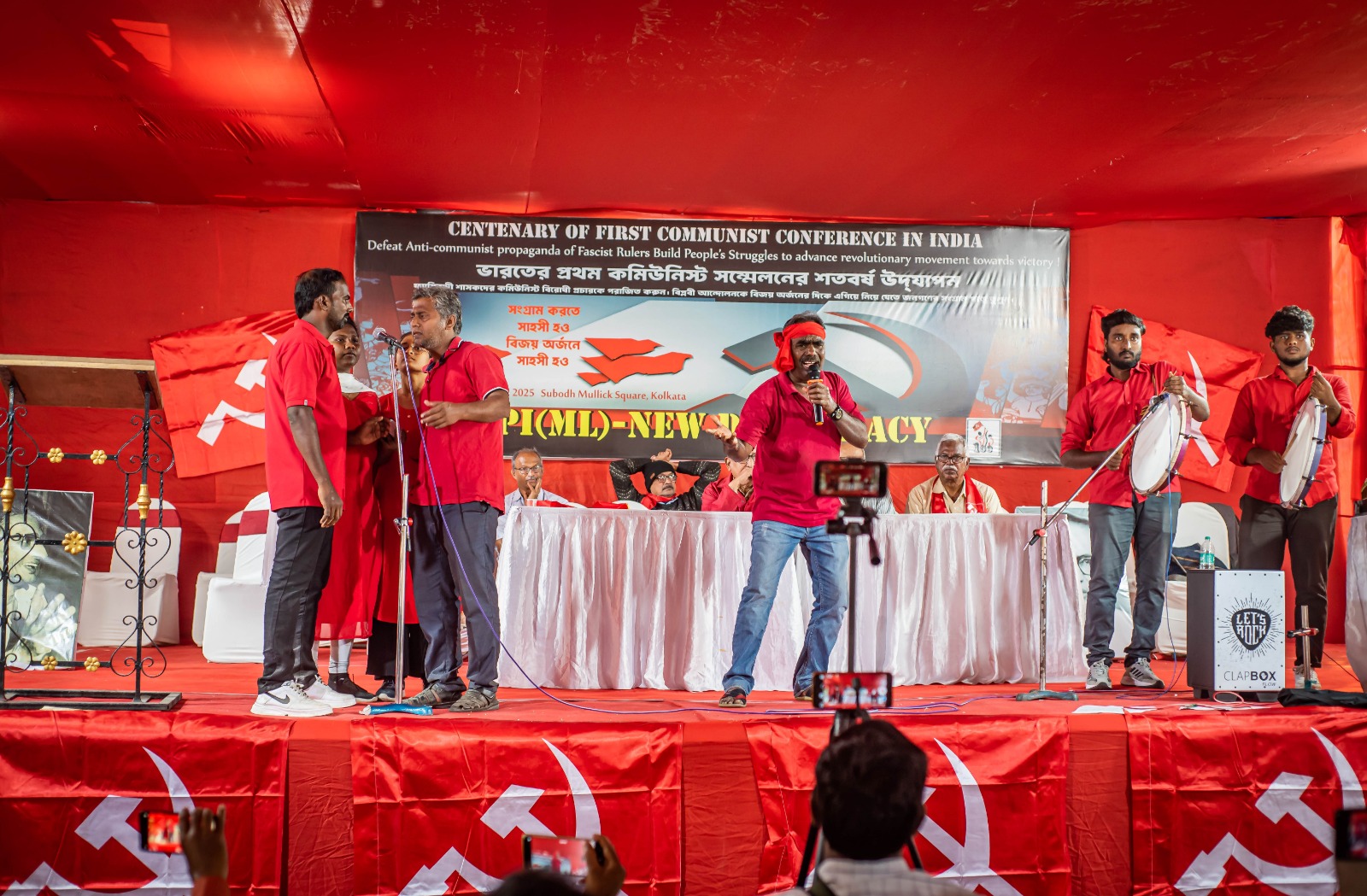
Interspersing the speeches and especially towards the end were revolutionary songs by Arunodya of AP and Telengana, Parivartan Sanskritic Manch (UP), by two PSU students of Punjab, by the WB students’ cultural group Sphulinga, by Com. Meghnad and a fiery performance by PALA comrades of Tamil Nadu led by Com. Kovan. The meeting ended to the stirring notes of the Internationale sung by a member of Sphulinga.
Meeting to mark centenary of First Communist Conference in India ended amidst great enthusiasm, confidence in Marxism-Leninism-Mao Zedong Thought and renewed conviction in the people’s struggles to not only defeat fascist onslaught and attempts to impose fascist dictatorship but to advance New Democratic Revolutionary Movement in India. Participants left the venue amidst the roar of slogans vowing to build and unleash militant mass movements to help advance New Democratic Revolution to victory. CC call to build people’s militant mass movements with the spirit of “Dare to Fight, Dare to Win” resonated among participants. Hundred years since First Communist Conference have furnished many valuable lessons. Drawing on them and basing on the concrete conditions of the present, Party should advance to make New Democratic Revolution victorious in India.
CPI (ML)-New Democracy
December 26, 2026

அருமை! “இந்திய கம்யூனிஸ்ட் கட்சி (எம்.எல்.)-புதிய ஜனநாயகம்” அமைப்பின் சார்பாக கல்கத்தாவில் நடைபெற்ற நூற்றாண்டு விழா கொண்டாட்டம் எழுச்சிகரமாக நடந்து முடிந்தது குறித்து மிக்க மகிழ்ச்சி. புரட்சிகர இந்நிகழ்வு வெற்றிகரமாக நடந்தேறிட உழைத்திட்ட மற்றும் பங்கு பெற்ற அனைவருக்கும் புரட்சிகரமான வாழ்த்துக்களை உரித்தாக்குவோம்! இந்நூற்றாண்டு விழா
நிகழ்வில் தமிழ்நாட்டிலிருந்து மக்கள் கலை இலக்கியக் கழகத்தின் சார்பாக அவ்வமைப்பின் பொதுச் செயலாளரான
தோழர் கோவன் தலைமையிலான கலைக்குழுவினர் பங்கேற்று சிறப்பான/எழுச்சிகரமான பாடல்களைப் பாடியும், இடை இடையே மொழி தெரியாத மக்களுக்கு ஆங்கிலத்தில் சில பல விளக்கங்களை எடுத்தியம்பியும் மக்களின் கர ஒலியைப்
பெற்றது சிறப்புடைத்து. கொல்கத்தா வரை சென்று மகஇக சார்பான பங்களிப்பை அளித்து முத்திரை பதித்து வந்த தோழர்களுக்கு மீண்டும் வாழ்த்துக்கள்!
‘மார்ச் 2026-க்குள் இந்தியாவில் எந்த ஒரு பகுதியிலும் நக்சலைட் என்ற பெயரிலான ஒருவர் கூட இல்லாமல் துடைத்தெறிவோம்’ –
என்று ஊளையிட்டான் கொலைகார சங்கி அமித்ஷா. ஆனால் கார்ப்பரேட் காவிப் பாசிசத்தைத் துடைத்தெறிய மார்க்சிய-லெனினிய அமைப்புக்கள் முன்னிலும் படுவேகமாக பயணப்படுகிறார்கள் என்பது பாசிசக் காவிக் கூட்டத்திற்கு தெரியாது.
ஏனெனில் மார்க்சியம் என்பது அந்த கூமுட்டைகளுக்கு விஞ்ஞானம் என்பதே புரியாது. கொல்கத்தா மாநாடு அவர்களுக்கு தக்க பாடம் புகட்டுவதற்கான எச்சரிக்கை மணி என்றே பறைசாற்றுவோம்!